


- IT Maintenance Services
-
Digital Product Service
 Product Service
 Smart Hospital
 - About Us
- Cases
- News
- Contact Us
- Join Us


In today's rapidly developing healthcare industry, hospital transportation services directly impact patient treatment efficiency and medical quality. As a critical node in hospital transportation services, the support center undertakes core functions such as drug distribution, specimen transportation, and accompanying examination services. Its operational efficiency directly influences the entire hospital's medical workflow.
However, under the traditional model, support centers face numerous challenges. Firstly, there is high turnover pressure, as these centers process large volumes of medications and specimens daily. Manual recording and transportation lead to inefficiency and increased error rates. Secondly, multi-department collaboration poses difficulties, as support centers must coordinate with clinical departments, laboratory departments, radiology departments, and other units. Traditional communication methods are inefficient, resulting in delayed information transmission. Additionally, quality control remains challenging, as the cleanliness of the support center environment and the maintenance status of equipment directly impact medical safety, yet real-time monitoring tools are lacking.
To address these pain points, Fwonei developed a one-stop central transportation system, which restructures hospital internal logistics through intelligent means to enable more efficient and intelligent support management, thereby promoting high-quality development of hospitals.
01
System Highlights
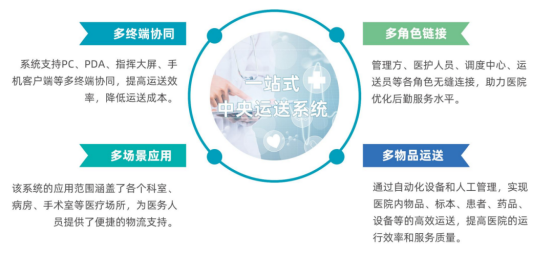
The Fwonei One-Stop Central Transport System achieves efficient transportation of items, specimens, patients, medications, and equipment within hospitals through automated devices and manual management, thereby enhancing operational efficiency and service quality. The system's application scope covers various medical settings including departments, wards, and operating rooms, providing convenient logistical support for healthcare professionals.
The system supports multi-terminal collaboration including PCs, PDAs, command large screens, and mobile client applications, enabling seamless integration among various roles such as administrators, medical staff, dispatch centers, and transport personnel. This not only enhances transportation efficiency but also reduces transportation costs, thereby assisting hospitals in optimizing logistics service levels.
02
functional module
01
Transport Management
Through intelligent scheduling, the system efficiently matches tasks with personnel, tracks material flow in real time, ensures delivery timeliness and safety, and dynamically adjusts resources to respond to urgent needs, thereby enhancing overall efficiency.
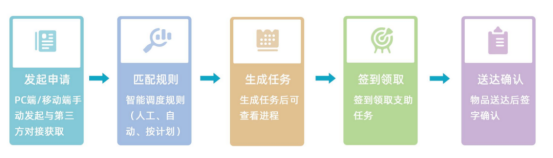
The application phase supports manual initiation via PC/mobile devices or task acquisition through integration with third-party systems; the assignment phase employs intelligent scheduling rules, including manual assignment, automatic allocation, and scheduled execution; auxiliary functions provide task cancellation, expedited processing, and customizable printing options, comprehensively enhancing delivery flexibility and controllability.
01 Pharmaceutical Support
Achieve precise drug delivery from pharmacies to support centers and wards, systematically record the entire handover process, and ensure medication safety.
02 Specimen Support
The entire specimen transportation process is traceable, with timestamp records at each stage from collection to testing, thereby reducing testing errors.
03 Inspection Accompaniment Support
Optimize the allocation of accompanying medical staff through intelligent scheduling algorithms to reduce patient waiting time and enhance healthcare experience.
02
Task Assignment Management
Task allocation is achieved through intelligent scheduling rules such as manual/automatic/planned execution, with task information displayed in real-time on a visual dashboard for comprehensive oversight by managers. The entire process status is dynamically updated, allowing applicants and recipients to track progress at any time, adjust collaboration promptly, and enhance efficiency.
Intelligent scheduling rules
The system employs intelligent scheduling rules with three flexible modes: manual assignment (where managers manually allocate tasks based on real-time demands), automatic assignment (automatically matching tasks and personnel using predefined algorithms and priority levels), and scheduled execution (triggering task distribution according to prearranged schedules). This ensures precise, efficient task allocation with high adaptability.
Full-process task management
Support tasks are updated in real-time at every stage from creation to dispatch and completion, enabling applicants and recipients to monitor task progress and make corresponding adjustments as needed. Concurrently, relevant task information is displayed on large screens, facilitating detailed review and management by department heads, ensuring clear visibility of task details.
RFID positioning technology
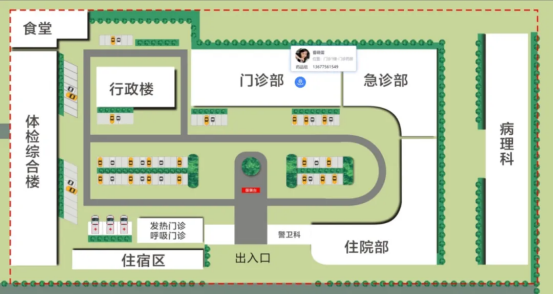
Real-time tracking of personnel and material locations is achieved through RFID tags, enabling hospital space management and intelligent scheduling. Task details can be queried at any time to optimize task allocation, enhance material flow efficiency and personnel scheduling, thereby promoting intelligent management.
03
analytical management
Upon completion of work order delivery, outpatient departments, pharmacies, and inpatient wards can evaluate processing speed, service attitude, and suggestions to establish a closed-loop service optimization system. The system simultaneously generates multi-dimensional reports to support management decision-making.
Evaluation Management
Upon completion of the delivery task, outpatient departments, hospital pharmacies, and inpatient wards may evaluate and provide feedback on the corresponding task. The evaluation criteria include processing speed and service attitude, and relevant suggestions or opinions can be included to establish a positive feedback loop, thereby further optimizing delivery services.
statistical analysis
Multi-dimensional reports are intelligently generated to provide management with data-driven decision-making support. The system comprises three core modules: support staff, task operation statistics, and clinical application data, offering robust data support.
04
Cleaning Management
Equipped with real-time personnel flow monitoring, dynamic environmental cleanliness assessment, airborne microbial concentration detection, indoor precise positioning tracking, and intelligent inspection management functions, it enables efficient control of cleaning operations, effectively enhancing hospital environmental hygiene quality and operational efficiency.
·
People flow monitoring
·
Analyze the flow of cleaning personnel within the hospital to facilitate timely adjustment of staffing allocation.
·
Environmental cleanliness testing
·
Monitor environmental conditions in real time to ensure cleanliness
·
Air Microbial Monitoring
·
Detection of microorganisms in the air to enhance hospital environmental hygiene
·
Indoor positioning system
·
It enables indoor positioning of personnel to track their location information.
·
Inspection Management
·
Conduct regular inspection and management to ensure the orderly progress of cleaning operations
05 Personnel Attendance
By integrating functions such as shift attendance tracking, intelligent scheduling, and electronic shift handover, the system achieves end-to-end digital management and enhances personnel management efficiency.
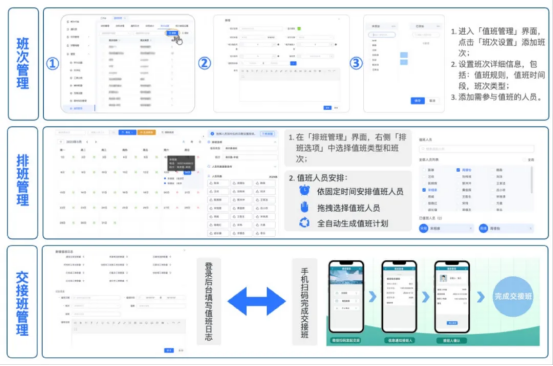
Attendance and leave management utilizes facial recognition, employee ID card swiping, and mobile check-in to track real-time employee arrival and departure times. It automatically generates attendance reports and provides alerts and statistics for abnormal attendance patterns (e.g., tardiness, early departure, or absenteeism).
The scheduling system supports multi-dimensional scheduling (e.g., by department, shift, or urgency level), automatically verifies scheduling conflicts, and optimizes personnel allocation. It is user-friendly—simply drag and drop to select on-duty personnel, and the system generates the duty schedule automatically.
Shift Handover
Standardized handover procedures support electronic handover of task lists and equipment statuses to ensure seamless information transfer. Handover records are automatically archived and support queries by time, personnel, department, and other dimensions for traceability and responsibility assignment.
Daily Report Monthly Report
Automatically summarize daily/monthly delivery task data and generate visual reports. Supports custom report dimensions (e.g., department, personnel, equipment utilization rate) to help management analyze efficiency and optimize resource allocation.
03
system value
The Fwonei One-Stop Centralized Transport System delivers multiple benefits to healthcare institutions, including enhanced efficiency, quality improvement, cost optimization, and management upgrades.
01 Intelligent scheduling reduces transportation time for medications, specimens, and other supplies, decreases waiting periods for accompanying examinations, and alleviates peak-hour pressure. 02 Fully traceable transportation processes and real-time environmental monitoring significantly lower medical error rates and substantially improve patient satisfaction. 03 Precise personnel and equipment allocation minimizes resource waste, while intelligent departmental management reduces labor costs. 04 Data-driven decision support enables hospital administrators to rapidly identify operational bottlenecks and continuously optimize service processes.
The Fwonei One-Stop Central Transport System facilitates the optimization of hospital transportation services by addressing industry pain points through technological innovation and enhancing medical service quality. In the future, with continuous technological advancements and deeper application, it will further promote the construction of smart hospitals and provide robust support for the high-quality development of the healthcare industry.

